Not all stainless steel jewelry is created equal. The grade matters more than most people realize—and it’s the difference between jewelry that lasts decades and pieces that corrode within months.
If you’ve been shopping for stainless steel chains or bracelets, you’ve probably seen different grade numbers: 316L, 304, 201. These aren’t just random codes. They represent fundamentally different alloy compositions with drastically different performance in real-world wear.
This guide breaks down exactly what separates 316L from 304 and 201 stainless steel, why the differences matter for jewelry, and which grade delivers the best value for daily wear.
Understanding Stainless Steel Grades
Stainless steel isn’t a single material—it’s a family of iron-based alloys with varying compositions. The grade number indicates the specific percentages of chromium, nickel, molybdenum, and carbon in the alloy.
Here’s what the numbers mean:
- 316L: Contains 16-18% chromium, 10-14% nickel, 2-3% molybdenum, and less than 0.03% carbon
- 304: Contains 18-20% chromium, 8-10.5% nickel, no molybdenum, and up to 0.08% carbon
- 201: Contains 16-18% chromium, 3.5-5.5% nickel, 5.5-7.5% manganese, and up to 0.15% carbon
These percentage differences fundamentally change how the metal performs in jewelry applications. <!– wp:image {“align”:”center”} –>
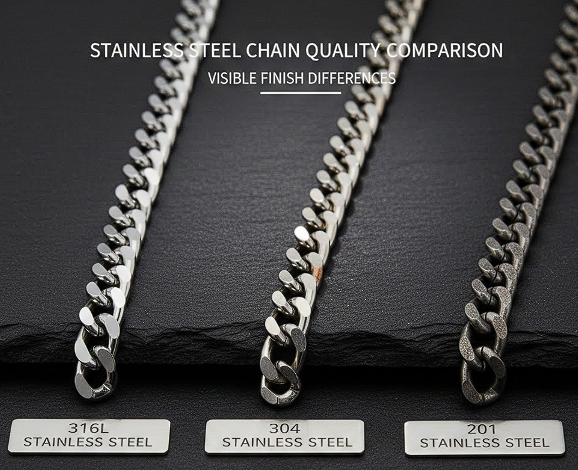
316L Stainless Steel: The Premium Choice
316L is surgical-grade stainless steel—the same material used in medical implants and high-end watch cases.
What makes 316L superior:
The molybdenum content (2-3%) is the game-changer. This element dramatically increases resistance to chloride corrosion, which means 316L withstands saltwater, pool chlorine, and sweat without degrading. If you wear jewelry daily or during physical activity, molybdenum protection is essential.
The “L” designation stands for “low carbon” (0.03% maximum). Low carbon prevents chromium carbide precipitation—a process where heat causes chromium to bind with carbon and create weak zones along grain boundaries. These zones corrode first, leading to structural failure. 316L eliminates this risk.
Real-world performance:
- Ocean swimming? No problem.
- Chlorinated pools? Completely safe.
- Gym sessions with heavy sweat? Won’t corrode.
- Daily showers? Actually recommended for cleaning.
- Lifespan? Indefinite with normal wear.
316L is hypoallergenic because the nickel is bound tightly within the alloy structure and doesn’t leach onto skin. People with nickel sensitivities rarely react to quality 316L stainless steel.
Why luxury brands use it:
Rolex, Omega, and other premium watch manufacturers exclusively use 316L for cases and bracelets. It’s not a budget choice—it’s an engineering choice. When your product needs to perform flawlessly for decades, 316L is the only logical option.
304 Stainless Steel: The Middle Ground
304 stainless steel is the most common grade globally. It’s used in kitchen appliances, restaurant equipment, and architectural applications.
For jewelry, it’s a compromise:
304 contains no molybdenum, which limits corrosion resistance in chloride environments. Saltwater and pool chlorine will eventually cause pitting and discoloration. Sweat (which contains salt) accelerates this process.
The higher carbon content (up to 0.08%) makes 304 more susceptible to sensitization during welding or heat treatment. Jewelry manufacturing involves heat, so cheaper 304 pieces often develop corrosion-prone zones you can’t see until they fail.
Where 304 works:
If you’re buying jewelry you’ll only wear occasionally—statement pieces for nights out, special occasions—304 can work. The key is limiting exposure to water and sweat.
For daily wear chains or bracelets you never remove, 304 is a compromise you’ll regret within 2-3 years.
Cost vs value:
304 costs about 15-20% less than 316L in raw materials. Some brands pocket this difference. Others pass savings to customers but don’t disclose the performance trade-off. When a “stainless steel chain” is priced significantly below market average, it’s probably 304 (or worse).
201 Stainless Steel: Avoid for Jewelry
201 stainless steel is the budget option you’ll find in fast-fashion jewelry and ultra-cheap marketplace listings.
Why 201 fails:
The nickel content is drastically reduced (3.5-5.5% vs 10-14% in 316L). Manufacturers replace nickel with manganese to reduce costs. This substitution fundamentally compromises corrosion resistance.
201 stainless steel will oxidize. It will discolor. In humid environments or with regular sweat exposure, you’ll see rust-colored pitting within 6-18 months. The higher carbon content (up to 0.15%) accelerates corrosion in sensitized zones.
The skin reaction problem:
Lower nickel sounds good for allergies, but it’s actually worse. The reduced nickel makes the alloy less stable, so what nickel exists is more likely to leach out and cause reactions. Plus, 201 often contains other allergens like manganese in higher concentrations.
Where you’ll find 201:
- $10-$30 “stainless steel” jewelry on Amazon
- Fast fashion retailers (Shein, Wish, etc.)
- Unmarked jewelry with no grade specification
- Products described as “stainless steel” without any details
If a brand won’t tell you the specific grade, assume it’s 201 or worse.
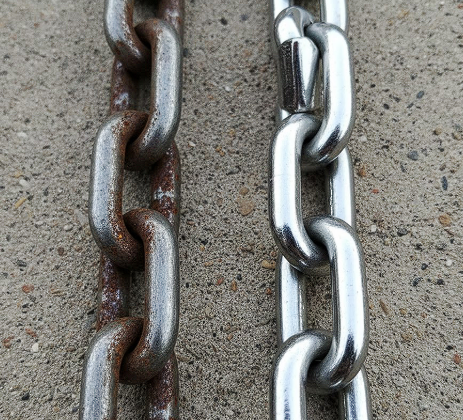
The Complete Comparison
| Feature | 316L | 304 | 201 |
|---|---|---|---|
| Molybdenum Content | 2-3% | 0% | 0% |
| Nickel Content | 10-14% | 8-10.5% | 3.5-5.5% |
| Carbon Content | <0.03% | <0.08% | <0.15% |
| Saltwater Resistance | Excellent | Fair | Poor |
| Chlorine Resistance | Excellent | Fair | Poor |
| Sweat Resistance | Excellent | Good | Poor |
| Sensitization Risk | Very Low | Moderate | High |
| Lifespan (Daily Wear) | Lifetime | 5-10 years | 1-2 years |
| Hypoallergenic | Yes | Mostly | No |
| Common Applications | Medical implants, marine hardware, premium jewelry | Kitchen equipment, architecture | Budget manufacturing |
| Typical Jewelry Cost | $100-$250 | $60-$150 | $10-$50 |
How to Identify Which Grade You’re Buying
Quality manufacturers stamp the grade directly on jewelry. Look for “316L” or “surgical steel” stamped near the clasp or on a small tag.
Red flags for inferior grades:
- Product descriptions that say “stainless steel” without specifying the grade
- Prices significantly below market average for the style
- No grade stamp anywhere on the piece
- Brands that won’t answer when you ask about the specific grade
- “Stainless steel” in quotes or with qualifiers like “stainless steel finish”
Questions to ask before buying:
- “What grade of stainless steel is this?”
- “Is it stamped 316L on the piece?”
- “Does your warranty cover tarnishing and corrosion?”
If a brand can’t or won’t answer these questions clearly, walk away.
Why VEYRO Only Uses 316L
Every VEYRO chain and bracelet is made from certified 316L surgical-grade stainless steel. No 304. No 201. No mystery alloys.
We could save 15-20% on materials by using 304. We could undercut competitors by using 201. We don’t, because those grades fail the performance standards our customers expect.
When someone buys a $150 chain, they’re trusting it to last. Using inferior materials to increase profit margins breaks that trust. We’d rather charge honest prices for premium materials than play games with alloy grades.
Every piece is stamped 316L and backed by a lifetime warranty against tarnishing and corrosion. That warranty costs us nothing because 316L doesn’t fail.
The Bottom Line
For daily wear jewelry, 316L is the only logical choice. The molybdenum content and low carbon composition deliver corrosion resistance that 304 and 201 can’t match.
304 works for occasional wear if you’re extremely careful about water and sweat exposure. It’s a compromise that saves a few dollars upfront but costs more in maintenance and eventual replacement.
201 has no place in quality jewelry. It will fail. It’s not a question of if—it’s when.
When shopping for stainless steel jewelry, don’t just ask if it’s stainless steel. Ask which grade. If the answer isn’t “316L,” keep looking.