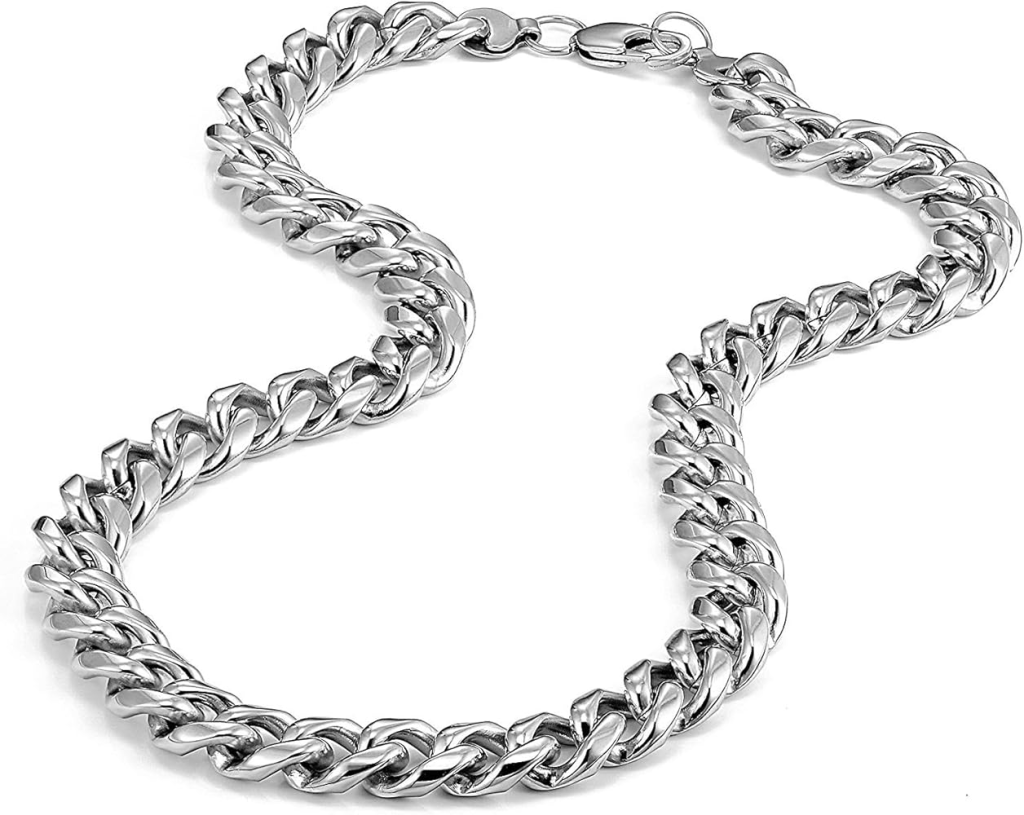
Can You Wear Stainless Steel Jewelry in the Shower and Gym?
Absolutely. When it comes to durability, 316L stainless steel is completely water-safe and tarnish-proof. Moreover, it’s the same material used in boat hardware and surgical tools, which means it’s built to withstand harsh conditions.
Why 316L Stainless Steel is Different
Unlike cheaper alloys, this grade won’t rust, corrode, or turn your skin green. Therefore, you can wear it 24/7 without taking it off. Whether you’re in the shower, at the gym, or swimming in the pool, your jewelry will maintain its appearance and integrity.
What’s the Difference Between VEYRO and Luxury Jewelry Brands?
Here’s where things get interesting. When comparing materials and construction quality, they’re often identical. Both VEYRO and luxury brands frequently use 316L stainless steel and 18K gold plating for their pieces.
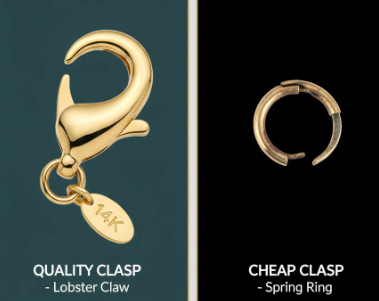
The Real Difference is Price, Not Quality
However, VEYRO’s prices are typically 70-80% lower than luxury brands. In fact, the difference isn’t quality—it’s markup. Luxury brands charge for retail overhead and brand prestige, while VEYRO focuses on charging for the actual product itself.
Understanding the Markup
Luxury retailers have significant costs beyond the jewelry itself. First, they maintain expensive storefronts in prime locations. Additionally, they invest heavily in brand marketing and prestige. Furthermore, their pricing includes margins for multiple middlemen in the supply chain.
In contrast, direct-to-consumer brands eliminate many of these extra costs. Consequently, they can offer the same material quality at a fraction of the price. This doesn’t mean sacrificing quality; rather, it means paying only for what actually matters—the jewelry itself.
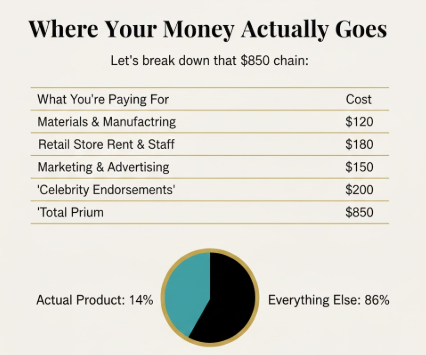
How Do I Know If I’m Getting Ripped Off on Jewelry?
The key is to compare material specs to the price. If a brand charges $800 for 316L stainless steel and won’t explain why, you’re likely overpaying. Transparency is crucial when evaluating jewelry value.
The Material Research Method
Start by Googling the materials used in the piece. Next, find other brands offering the same specifications. If there’s a 500% price difference for identical materials, that’s pure markup—not better quality or craftsmanship.
Red Flags to Watch For
There are several warning signs that indicate you might be overpaying:
- Vague material descriptions: Reputable brands clearly state what materials they use. If they’re dodging specifics, that’s a red flag.
- Reluctance to justify pricing: Furthermore, if they can’t explain why their 316L steel costs significantly more than competitors’, question the value.
- Excessive price differences: Additionally, when identical materials have wildly different prices, the higher cost usually reflects branding, not quality.
- No material certifications: Beyond that, legitimate high-quality jewelry should come with clear material specifications or certifications.
Making Informed Jewelry Purchases
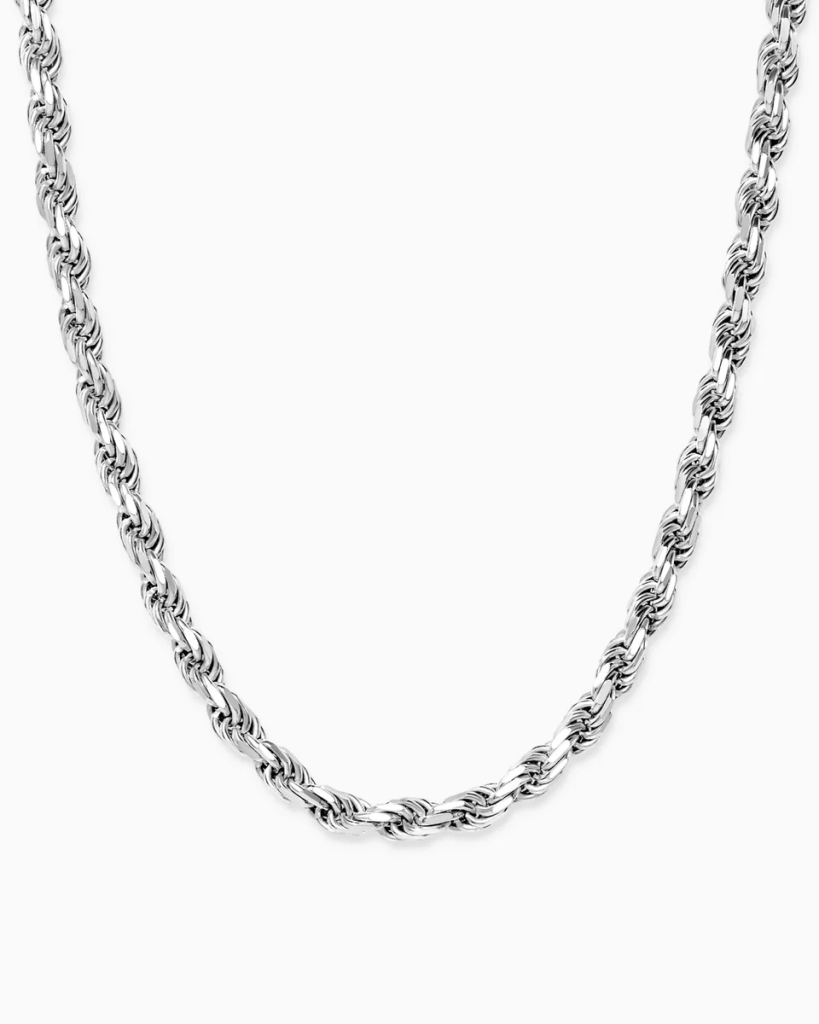
Armed with this knowledge, you can now make smarter jewelry decisions. Instead of paying for brand names and retail overhead, focus on what actually matters: the quality of the materials and construction.
Remember that 316L stainless steel performs the same whether you pay $100 or $800 for it. Therefore, choosing brands that price fairly doesn’t mean compromising on quality. Rather, it means getting the same durability and appearance without the inflated price tag.